
TopBet9 mobile casino and browser experience
 Available in AU
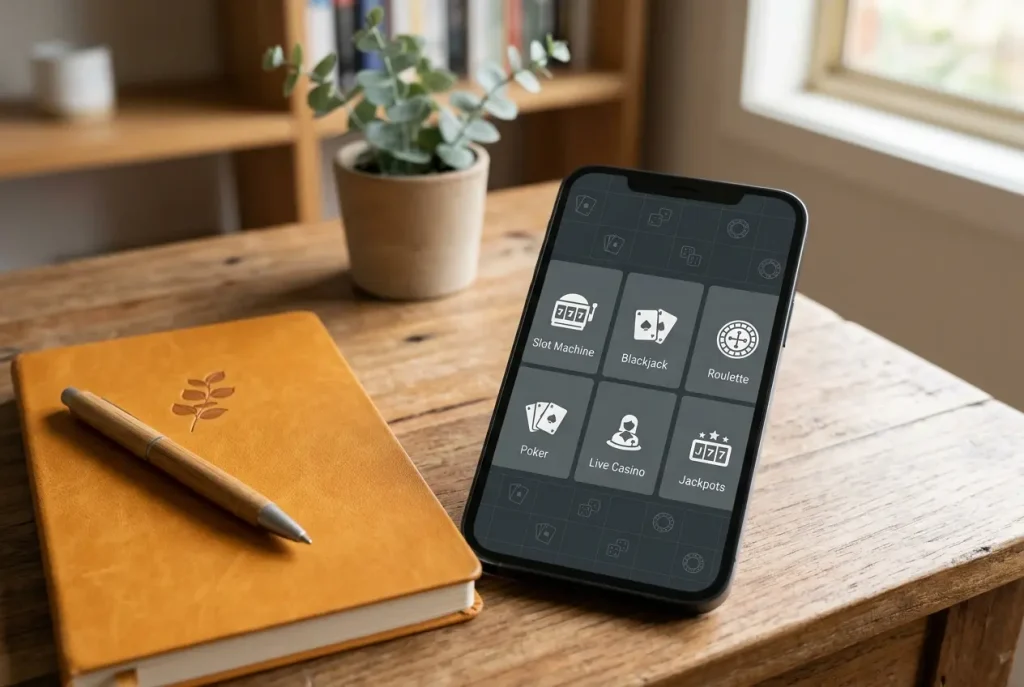
TopBet9-associated casino descriptions emphasise browser-based play on a phone alongside slots, live tables and mobile access to an account. A mobile browser can display game pages, payment information and account controls in one place, but these functions behave differently on a small touchscreen. Understanding the distinctions helps readers interpret the product without mistaking a compact interface for a different set of game or payment rules.
The games and providers guide examines the categories described for TopBet9, while the payments and withdrawals guide explains the distinction between a cashier request and money reaching its destination. The account guide covers privacy and verification in more detail. This mobile overview focuses on how those subjects intersect when a person is using a handheld device.
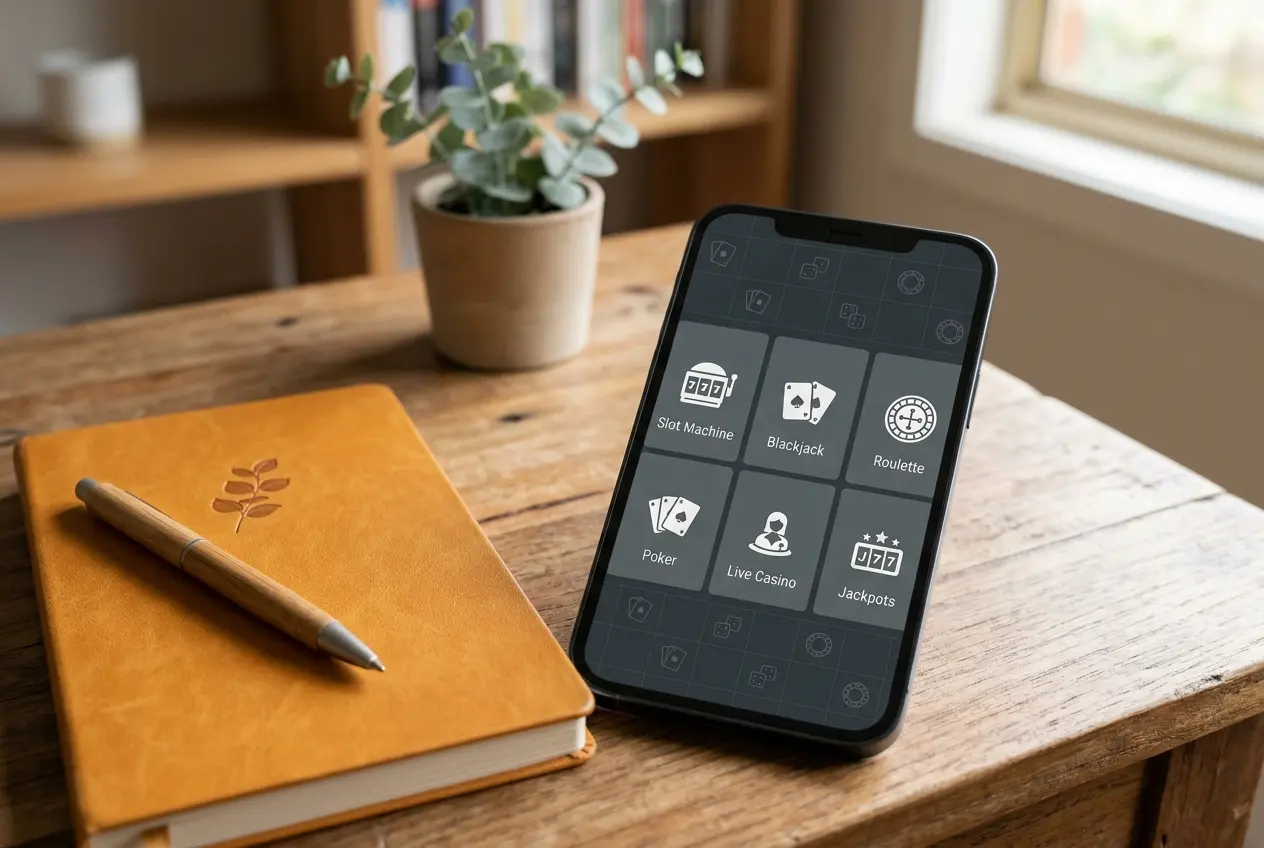
Table of Contents
- Browser-based casino use on a phone
- Reading cashier activity on a smaller screen
- Touch controls, readability and interrupted sessions
- How game categories fit into mobile navigation
- Personal information on shared and synchronised devices
- The mobile experience is a collection of separate controls
- Questions about TopBet9 on mobile
Browser-based casino use on a phone
TopBet9-associated listings describe a mobile-browser experience for the casino catalogue. That positioning matters because browser pages depend on the device’s operating system, browser, connection and available screen space. A page can adapt its layout without changing the underlying rules of a game. The user is still interacting with a remote service, and a smaller display should not be read as evidence of different settlement or withdrawal terms.
Mobile use involves several distinct layers. The first is the site’s layout: navigation, game categories and controls need to fit on a narrow screen. The second is browser behaviour, including tabs, permissions, saved passwords and automatic reopening of recent pages. The third is the live connection to a remote service, which determines whether balance updates or game activity can be displayed as intended. These layers can produce different symptoms when something goes wrong.
A page that scrolls poorly is a layout problem; a browser that loses its connection may interrupt a session; an account balance that is awaiting reconciliation is a transaction-state issue. Confusing these problems can lead someone to treat a frozen screen as a game outcome or an incomplete cashier request as a completed transfer. A practical mobile review therefore follows the task being performed rather than the visual appearance of the screen alone.
On a phone, moving between a game, an account menu and a payment screen can involve tabs, overlays or redirects. An unfinished form may be discarded if the user closes a tab or the browser reloads it. This is a general browser limitation, not a specific TopBet9 policy. Details such as a displayed reference number or an in-progress request should be distinguished from the confirmation that the action was accepted by the service.
The phone’s physical environment also matters. Low battery, inconsistent reception or a switch between mobile data and wireless internet may interrupt loading at an inconvenient moment. A game image remaining visible on screen does not tell a reader whether a remote action was accepted. For financial activity, the reliable distinction is between what was entered locally and what appears in a transaction history or receipt.
Accessibility on handheld devices can improve when text and controls are allowed to enlarge. Browser zoom and operating-system text settings may expose clipped menus on websites that use fixed-width layouts. Readers should distinguish difficulty accessing a control from a substantive change in an underlying game rule. The account records section explains why the final transaction record, not the visual layout, is central when checking an event.
Reading cashier activity on a smaller screen
TopBet9-related public listings mention a mixture of card, transfer, wallet and cryptocurrency payment options. Those descriptions concern payment categories, rather than evidence that every method appears in an Australian account. On a mobile device, payment information is often compressed into cards, dropdowns and confirmation screens. The most important distinction remains the same: a deposit instruction, a pending request and a completed transfer are separate events.
A payment may pass through an account interface and an external financial network. The casino-facing screen can describe a request as submitted while the receiving service still has its own processing steps. A short mobile notification may show only a status label, omitting a method name, network or reference number that appears elsewhere in the transaction history. For this reason, a notification is weaker evidence than the fuller record it refers to.
Cryptocurrency adds an extra layer. Bitcoin and USDT are named in TopBet9-associated lists, but the token name alone does not identify a blockchain network, deposit address or exchange rate. Copying a destination from a phone screen is particularly error-prone when text is truncated. A blockchain transaction identifier proves that a transaction exists on the relevant network; it does not by itself prove the casino credited the same amount to an internal account.
Different states on a small screen
| Mobile display | What it indicates | What to distinguish |
|---|---|---|
| Request entered | Information has been supplied to a form | Whether the service accepted it |
| Pending | Processing is not finished | Internal processing versus external settlement |
| Transfer reference | An event can be traced in a payment system | Destination receipt and account credit |
A receiving address must be understood in the context of the selected asset and network. Tokens using similar symbols can operate on different chains. Network fees and exchange-rate changes can affect the final value of a transfer, while irreversible settlement can make a mistaken destination difficult or impossible to correct. The payments guide explains these financial mechanics and the separate roles of transfer processing and internal account crediting.
An ordinary bank or card entry has different risks. A payment request can depend on the issuing bank, merchant category restrictions, authentication screens and identity checks. The appearance of a card icon in a public listing does not establish successful payment acceptance or local eligibility. Mobile authentication prompts can also appear outside the main page, requiring the user to distinguish a legitimate issuer challenge from an unexpected request for sensitive credentials.
Payment records are most useful when they preserve the amount, currency, method, reference and status together. A cropped screenshot of a green success label may leave out the question of which stage was successful. Similarly, a pending withdrawal visible in an account menu is not evidence that the recipient has been paid. Where a discrepancy arises, the precise stage matters more than whether the page was viewed on a phone or desktop computer.
Touch controls, readability and interrupted sessions
A touchscreen changes how game controls and account menus are reached. Desktop layouts often have room for persistent navigation, while mobile layouts hide actions behind a menu or place them below the visible area. A reader may therefore need to scroll before seeing the stake, game rules or account history. The fact that a button is accessible by touch says little about whether its surrounding information is legible at the same size.
Mobile casino pages may contain animations, sound, moving counters and multiple layers of game information. When the interface becomes crowded, it is easy to focus on the most visually prominent element and overlook a rule, balance figure or instruction. This is particularly important for slots and table games, where the game result depends on underlying rules, not on how large the animation appears.
Tap targets should be large enough to separate adjacent controls. Accidental input is more likely when controls are tightly spaced or the device is moving. Screen orientation can change their position, and a temporary software keyboard can cover important context. These are universal mobile design considerations rather than observations about a particular measured TopBet9 interface.
Screen checks that support comprehension
- Look for the complete stake and relevant game rules, beyond the most prominent animation.
- Distinguish a loading indicator from a round result or settlement message.
- Use readable text and adequate contrast when reviewing financial records.
- Keep personal information out of screenshots shared for informal advice.
Reading comfort is another factor. Small type, low contrast or an overlay can conceal transaction details. Increasing text size, using device accessibility settings or returning to a complete history view may help a reader understand what the service displays. A screen recording can preserve a visual sequence but may expose passwords, balances or personal details if stored or shared carelessly.
Connection loss should also be treated carefully. A spinner or delayed animation is not a settlement receipt. Closing and reopening a browser tab may change the displayed state without changing what the remote server recorded. For a game question, a round identifier and game history are more relevant than a memory of the animation. For an account question, the transaction or support reference is more relevant than the menu that was open.
An interrupted session can be frustrating, particularly when gambling is already affecting someone’s emotions. Repeatedly refreshing, increasing stakes or continuing to play to resolve uncertainty does not fix an accounting problem. The appropriate evidence depends on the type of event; the games discussion covers round rules, while account controls covers records and personal boundaries.
How game categories fit into mobile navigation
TopBet9-related descriptions group the casino offering into pokies or slots, live-dealer tables and other table games. Those are product categories; they do not dictate a single mobile menu design. A slot is usually organised around reels, symbols, paylines or other reward mechanics, while a live table may need to display a streamed dealer, betting controls and a round timer. The information a reader needs is therefore different even when both categories appear in the same browser.
A slot’s return-to-player figure, where attached to a particular game, describes a theoretical long-run proportion of stakes returned under its mathematical model. It is not a forecast for a short mobile session. The size of the phone screen does not change the underlying probability or the game’s mathematical design. A clear mobile interface should allow users to distinguish stake settings, round results and the rules that govern them.
Live-dealer games introduce timing and streaming requirements. A delayed image or unstable connection can make it harder to follow the sequence of a round. Betting windows and settlement stages are game-specific, so a frozen video frame should not be mistaken for a definitive outcome. The meaningful record is the game and round history maintained by the service, not the last visible frame on the phone.
Public TopBet9-related listings name CQ9, Microgaming, Live22 and Ace333 among game suppliers. Those names provide a way to understand the range of formats described, but a supplier’s general catalogue cannot establish which exact titles were offered in a particular account, region or moment. Game-specific rules and eligibility depend on the actual title and the service’s presentation of it.
Finding a game on a small display can also change the way categories are perceived. A prominent featured tile may appear more important than the rest of the catalogue simply because only a handful of tiles fit above the fold. Search, categories and the ability to read rules are more informative than the visual prominence of a banner. A catalogue count on a promotional landing page is not a substitute for a current list of titles.
For mobile readers, the central question is whether the screen reveals enough of the game state to understand an action: the stake, the rules, the round and the result. A strong visual presentation can support legibility, but it cannot establish fairness, game availability or a guaranteed outcome. Those topics require different types of evidence and are explained in the game categories guide.
Personal information on shared and synchronised devices
A mobile browser can retain account-related information long after the visible session ends. Password managers, form autofill, browser history, synced tabs and notification previews are useful conveniences, but they can disclose activity to anyone with access to the device or linked account. Private browsing may reduce some local history, yet it is not a substitute for account access controls or a secure device.
The difference between logging out and closing a tab is important. A tab may disappear while the underlying session cookie remains valid, depending on the service and browser. A screen lock helps limit casual access to the device, but it does not prevent someone with another valid session from accessing the same account. Password reuse across sites creates an additional risk if credentials are exposed elsewhere.
Account recovery messages and payment verification codes should be treated as sensitive. A message that creates urgency or requests a one-time code outside an authenticated workflow can be a phishing attempt. Casino-related names are also easy to imitate in domain names or message senders. The correct identity of a service cannot be inferred solely from a familiar-looking logo or a shortened URL.
Different layers of protection
- Device lock
- Reduces casual access to the phone.
- Session sign-out
- Addresses continued access within a browser account session.
- Credential care
- Protects passwords, recovery channels and one-time codes.
- Personal boundaries
- Help recognise gambling-related financial and personal harm.
Notification settings deserve attention when using a shared phone. A lock-screen alert can reveal account activity, while a saved screenshot can include payment details, contacts and other personal information. Before sending records in a support conversation, a person should consider which details are necessary to explain the problem and which details could enable identity theft or unwanted account access.
Device privacy and gambling harm are connected but distinct. Protecting a password does not reduce the mathematical risk of repeated betting; setting a personal spending or time boundary does not secure stored documents. A person who notices gambling becoming difficult to control can contact Gambling Help Online independently of any casino or account. In Australia its is gamblinghelponline.org.au, with phone support on 1800 858 858.
A practical mobile perspective is therefore broader than screen size. The browser displays information, the account records events, outside payment systems process transfers and the device stores traces of use. Keeping these layers separate helps readers understand both the convenience and the limitations of a handheld casino interface.
The mobile experience is a collection of separate controls
TopBet9’s browser-first positioning brings the game catalogue, account and cashier material together on a handheld screen. The useful distinctions are between layout and game rules, local display and remote records, and payment requests and completed transfers. A mobile view can make those tasks compact, but it does not alter their underlying meaning.
For a person assessing such a product, legible game rules, understandable transaction histories and protection of private information matter more than an attractive small-screen banner. The same practical framework applies across slots, live tables and payment categories, whether the interface is viewed in portrait or landscape orientation.
Questions about TopBet9 on mobile
How is TopBet9 described for mobile use?
TopBet9-associated listings emphasise casino access through a mobile browser, including game categories and account functions.
Does using a phone change the rules of a slot?
No. A device changes how the interface is displayed; the rules and mathematical model belong to the particular game.
Does a mobile payment notification prove a withdrawal is complete?
No. A notification may refer to a request or processing stage. Completion requires the relevant payment record and receipt at the destination.
What personal information can a shared phone expose?
Browser history, saved credentials, synchronised tabs and notification previews can reveal account or transaction information.
Where is Australian gambling support available?
Gambling Help Online provides support at gamblinghelponline.org.au and by phone on 1800 858 858.